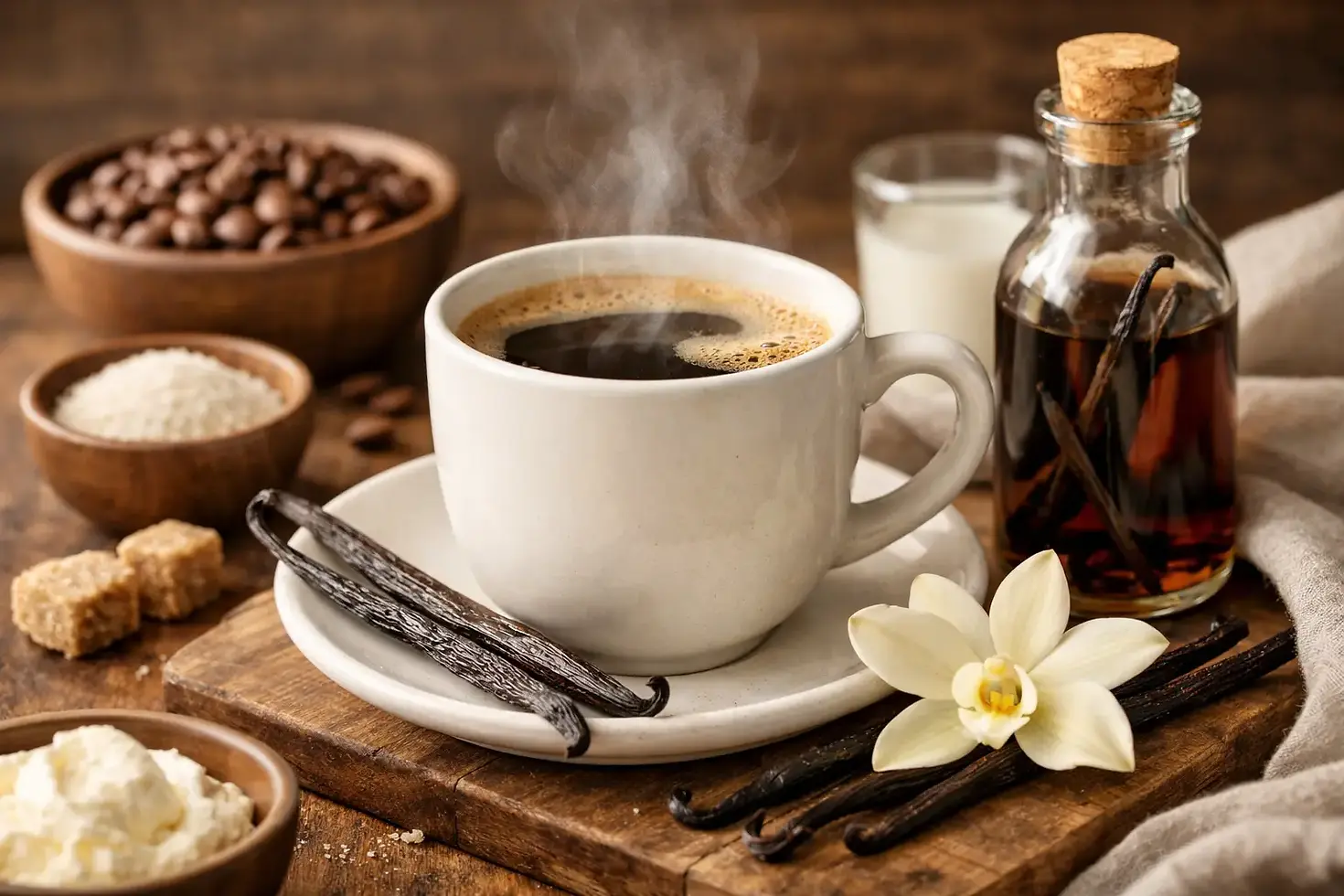
Can Vanilla Enhance Coffee? Yes, Here's How
A little vanilla can change the whole feel of a morning cup. It does not need to turn coffee into dessert or cover up the roast you chose so carefully. So, can vanilla enhance coffee? Absolutely. Used with a light hand, real vanilla rounds out bitter edges, boosts the coffee's natural sweetness, and gives every sip a warm, bakery-worthy aroma.
The key is balance. Coffee already carries a surprising range of flavors, from cocoa and toasted nuts to bright fruit and gentle spice. Vanilla works best when it supports those notes rather than taking over. Think of it as the background harmony that makes the melody sound fuller.
Can Vanilla Enhance Coffee Without Making It Too Sweet?
Yes, because vanilla is more than a sweet flavor. Its aroma reads as soft, creamy, and comforting, even when you have not added much sugar. A few drops of pure vanilla extract can make a medium or dark roast taste smoother and more rounded. In a lighter roast, it can emphasize caramel, chocolate, or floral notes, depending on the bean.
That said, vanilla cannot rescue coffee that is badly brewed. If your cup is harsh because the water was too hot, the grind was too fine, or the brew sat on the warmer too long, adding vanilla may only disguise the problem for a sip or two. Start with coffee you enjoy on its own, then use vanilla to give it a little extra personality.
Vanilla is especially lovely with coffee that has naturally nutty, cocoa-like, or caramelized notes. It can also soften the sharper edges of a dark French roast or espresso. Bright, citrus-forward coffees can work beautifully too, but they call for a more restrained hand. Too much vanilla can blur the lively character that makes those beans interesting.
Why Vanilla and Coffee Taste So Good Together
Coffee and vanilla share a cozy, aromatic language. Roasting coffee creates compounds that suggest toasted sugar, chocolate, and warm spice. Vanilla brings its own deep, fragrant sweetness, so the two flavors meet in a way that feels familiar without being flat.
There is also a practical reason vanilla works: aroma shapes a huge part of what we perceive as flavor. When steam carries vanilla's fragrance upward, the coffee can seem sweeter and creamier before it even reaches your tongue. That is why a modest amount often delivers more impact than an extra spoonful of sweetener.
Real vanilla extract has a more layered flavor than many heavily flavored syrups. It can be woodsy, floral, gently smoky, and almost caramel-like. Those details make it a beautiful pantry ingredient for people who want a more intentional coffee moment without losing the taste of the coffee itself.
Pure extract, vanilla bean, or vanilla sugar?
Each option creates a slightly different cup. Pure vanilla extract is the easiest place to start. It disperses quickly in hot coffee and lets you control the amount drop by drop. Add it after brewing, ideally before milk or cream, so you can taste the effect clearly.
Vanilla bean paste offers a richer, more concentrated vanilla presence and those tiny specks that look especially pretty in a latte or cold foam. It is best whisked into a little warm milk or sweetener first, since it can cling together in plain coffee.
Vanilla-infused cane sugar is a simple choice when you prefer your coffee lightly sweetened. It gives you sweetness and vanilla in one measured addition. Vanilla honey brings a more rounded, floral sweetness that can be especially good in a creamy iced coffee, though its distinct character may not be the best match for every delicate single-origin brew.
How Much Vanilla Should You Add to Coffee?
For an 8-ounce cup, begin with 1/8 teaspoon of pure vanilla extract. That is roughly a few drops, and it is enough to notice without making the coffee taste like frosting. Stir, take a sip, and add a touch more only if the cup needs it.
For a 12- to 16-ounce latte or iced coffee, 1/4 teaspoon is usually a comfortable starting point. Milk naturally softens flavors, so it can carry a bit more vanilla than black coffee. If you are making a full pot or a pitcher of cold brew, add vanilla gradually and taste as you go. It is far easier to add another small splash than to correct an over-vanillaed batch.
If you use vanilla sugar or honey, start with the amount of sweetness you normally enjoy. The vanilla should be noticeable in the aroma and finish, not so strong that every coffee tastes the same.
Best Ways to Use Vanilla in Your Coffee
The right method depends on how you take your coffee. For a hot cup with no milk, stir a few drops of pure vanilla extract directly into the brewed coffee. It is quick, clean, and lets the bean remain front and center.
For lattes, cappuccinos, and café au lait, add vanilla to the cup before pouring in the hot coffee and steamed milk. The heat helps carry the aroma, while the milk gives the flavor a soft, creamy setting. A small spoonful of vanilla sugar works well here too.
Iced coffee benefits from a little advance mixing. Extract blends readily, but sugar can settle at the bottom of a cold drink. Stir vanilla sugar or vanilla honey into a tablespoon or two of hot coffee, warm water, or milk first, then add ice and the rest of your coffee. The result is evenly flavored instead of sweet at the bottom and plain at the top.
Cold brew is naturally smooth and chocolatey, which makes it one of vanilla's best partners. Try a small amount of vanilla in the concentrate or mix it into each glass with milk. For an easy weekend pitcher, combine cold brew, milk of choice, vanilla, and a modest amount of sweetener, then chill until serving.
Flavor Pairings That Keep Vanilla Coffee Interesting
Vanilla is a generous supporting flavor, which means it plays well with many coffee additions. A pinch of cinnamon makes it feel warm and spiced. Cocoa powder turns the cup toward mocha territory. Maple adds a deep, breakfast-table richness, while a spoonful of honey brings floral notes and a silky finish.
For something bright, pair vanilla with orange zest in a latte or a cold brew mocktail-style coffee drink. For something cozier, try vanilla with a tiny pinch of cardamom or nutmeg. Keep the secondary flavor subtle. You are building dimension, not turning the mug into a crowded spice cabinet.
At Bee-utiful Infusions, we love that a thoughtfully flavored pantry staple can make a familiar ritual feel newly special. A good vanilla extract or vanilla-infused sweetener earns its place by being flexible enough for weekday coffee, weekend baking, and the occasional after-dinner drink.
A Few Common Vanilla Coffee Missteps
The most common mistake is simply using too much. Vanilla is fragrant, and its sweetness can seem to grow as the coffee cools. Start small, especially with espresso, where every flavor is concentrated.
Another misstep is relying on imitation vanilla when you want a more nuanced result. It can be useful in some baking situations, but in a simple cup of coffee there are fewer flavors to hide behind. Pure vanilla extract gives a fuller, more natural-tasting finish.
Finally, consider the coffee itself. A bold diner-style blend can handle vanilla, milk, and a generous spoonful of sweetener. A rare, lightly roasted coffee with delicate berry notes may be better with only a drop of vanilla or none at all. There is no single right recipe, only the cup that tastes right to you.
Tomorrow morning, try the smallest possible addition: a few drops of pure vanilla in the coffee you already make. Take one sip before adding anything else, notice what changes, and let that little bit of kitchen curiosity lead the way.