Cane Sugar vs Turbinado Sugar Which Is Best?
A spoonful can change more than sweetness. In the cane sugar vs turbinado sugar conversation, the real difference is what happens around that sweetness: a clean, familiar dissolve versus a warmer caramel note and a satisfying crunch. Both belong in a well-stocked kitchen, but they do not always perform the same way.
For home bakers, coffee people, cocktail makers, and anyone setting out a beautiful breakfast spread, choosing the right sugar is an easy way to make everyday food feel more considered. Here is what separates these two pantry staples and when each one earns its place.
What Is Cane Sugar?
Cane sugar is sugar made from sugarcane. That sounds straightforward, but the phrase can cover several products, from white granulated sugar to less-refined options. On a typical grocery shelf, a bag labeled simply “cane sugar” usually means granulated sugar that has been refined and crystallized from sugarcane rather than sugar beets.
Its crystals are generally small, dry, and uniform. The flavor is clean and sweet, without a strong molasses character, which makes it exceptionally flexible. It disappears into hot coffee, blends smoothly into cake batter, and lets vanilla, fruit, spices, chocolate, and other featured flavors do the talking.
Cane sugar is the reliable all-purpose choice when a recipe calls for granulated sugar. It brings sweetness and structure without changing the color or personality of the finished dish very much.
What Is Turbinado Sugar?
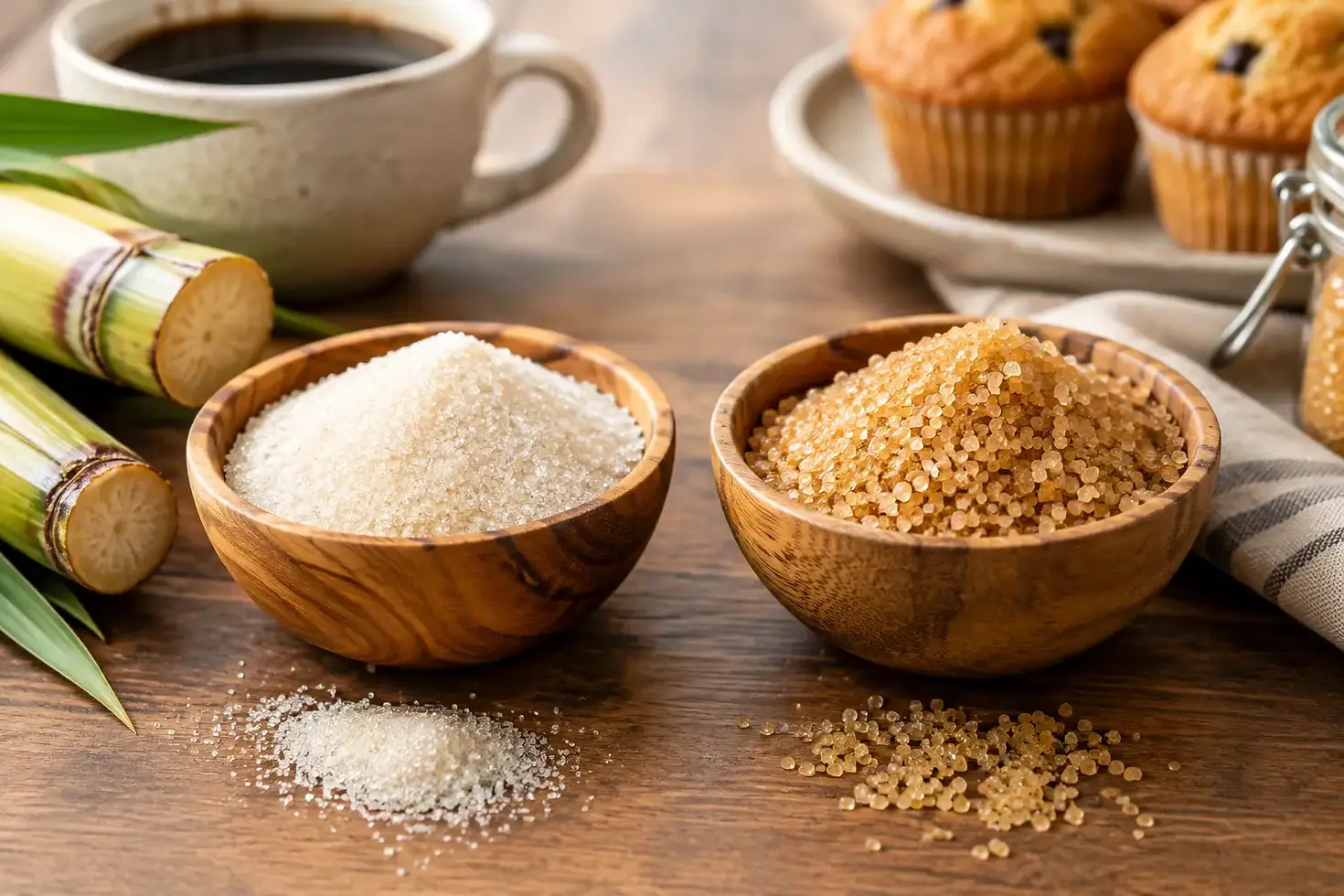
Turbinado sugar is also made from sugarcane, but it is less refined than standard white granulated cane sugar. After the cane juice is processed and crystallized, some of the natural molasses remains on the crystals. The result is a golden-brown sugar with larger, sparkling grains and a light caramel-like flavor.
Its name comes from the turbine process used to spin excess moisture away from the crystals. Turbinado is often sold as a raw-style sugar, though that description can be confusing. It has still been processed for food use; it is simply not refined to the same degree as white cane sugar.
The appeal is immediate: warm color, a hint of toffee, and a crunch that feels right at home on a muffin top or the rim of a cocktail glass. Turbinado brings its own flavor to the party, which is exactly why it can be wonderful in one recipe and a less-than-perfect swap in another.
Cane Sugar vs Turbinado Sugar at a Glance
The biggest distinction is not where these sugars come from. Both start with sugarcane. It is refinement, crystal size, color, and flavor that create the difference.
Standard cane sugar is typically white or off-white, with fine crystals and a neutral sweet flavor. It dissolves readily, so it is a natural fit for batters, meringues, simple syrups, and everyday drinks. Turbinado sugar is golden, coarser, and lightly molasses-forward. It dissolves more slowly and adds texture along with sweetness.
Neither one is automatically “better.” The best choice depends on whether you want sugar to quietly support a recipe or add visible sparkle and deeper flavor of its own.
When Cane Sugar Works Best
Choose cane sugar when consistency matters. Its finer crystals are easier to measure, cream into butter, and dissolve throughout doughs and batters. If you are making a delicate vanilla cake, lemon cookies, whipped cream, or a smooth homemade syrup, it is the dependable option.
It is also the better choice for drinks that need a clean finish. A teaspoon in hot tea or coffee melts in quickly. For cold beverages, a simple syrup made with cane sugar gives even sweetness without grains settling at the bottom of the glass.
Flavored cane sugars offer another reason to keep this style of sugar close by. When thoughtfully made, they can bring bright citrus, cozy spice, or other distinctive notes to coffee, tea, baking, and cocktails while retaining the easy-dissolving qualities of granulated sugar. Bee-utiful Infusions approaches this familiar pantry ingredient as a place for flavor creativity, made in small batches for easy everyday use.
When Turbinado Sugar Shines
Turbinado is at its best when you can see and taste the crystal. Sprinkle it over scones, quick breads, fruit crisps, muffins, or pie crust before baking. The larger grains hold their shape better than fine cane sugar, creating a lightly crisp, bakery-style finish with a golden sheen.
It also adds a welcome dimension to certain drinks. Try it on the rim of an old fashioned, espresso martini, or citrus-forward mocktail. In hot coffee, turbinado brings a subtle caramel note that plays especially well with darker roasts and warm baking spices.
For entertaining, a small bowl of turbinado beside coffee or tea offers guests a simple, thoughtful choice. Its warm color looks beautiful on a brunch table, cheese board, or dessert station, especially when paired with fresh fruit, shortbread, or a creamy dessert.
Can You Substitute One for the Other?
Usually, yes, but the result may change. You can often swap cane sugar and turbinado sugar in a one-to-one amount for casual baking, oatmeal, coffee, and many sauces. Expect turbinado to add more color, a faint molasses note, and a bit of crunch if it does not fully dissolve.
The swap is less reliable in recipes where crystal size affects texture. Fine cane sugar is better for meringue, angel food cake, delicate cookies, custards, and recipes that begin by creaming butter and sugar. Coarse turbinado crystals may not incorporate as smoothly, which can leave a grainier texture or alter how evenly a baked good rises.
Turbinado can also be stubborn in cold drinks. If you want its flavor in iced tea, cold brew, or a shaken cocktail, dissolve it first in a small amount of hot water to make a quick syrup. That extra minute prevents a glass full of sweetness at the bottom and very little in the first sip.
A Note on Brown Sugar
Turbinado sugar and brown sugar are often grouped together because both are brown, but they are not interchangeable in every recipe. Brown sugar is typically finer and moister, with more molasses flavor and a soft, packable texture. That moisture affects cookies, cakes, glazes, and barbecue sauces.
Turbinado, by contrast, is dry and coarse. It is a finishing sugar first and an all-purpose baking sugar second. If a recipe specifically calls for packed brown sugar, use brown sugar for the most predictable result. If you want a crackly topping or a little amber sparkle, reach for turbinado.
How to Keep Both Sugars Fresh
Store cane sugar and turbinado sugar in airtight containers in a cool, dry cupboard. Moisture is the main enemy. It can cause sugar to clump and make it harder to measure or sprinkle evenly.
There is no need to make your pantry complicated. A jar of everyday cane sugar handles the quiet work of baking and stirring. A jar of turbinado adds texture, color, and a warm finishing note when the moment calls for it. Keep both within reach, then let the recipe decide whether it needs a smooth sweetness or a little golden crunch.