Cocktail Sugar Rim Ideas for Better Home Drinks
The first sip of a well-finished drink should feel intentional. A cocktail sugar rim brings a little sparkle to the glass, but its real value is flavor: a bright citrus note before a margarita, warm cinnamon alongside an apple cocktail, or berry sweetness that softens a tart spritz. It is a small detail that makes an ordinary pour feel ready for company.
For home hosts, a rim is also one of the easiest ways to make a drink look special without changing the recipe in the glass. The key is choosing a sugar flavor that belongs with the drink, applying it with a light hand, and leaving room for guests to enjoy the cocktail itself.
Why a Cocktail Sugar Rim Changes the Drink
Sugar on the rim is not simply decoration. As someone lifts the glass, the aroma of the sugar reaches them first. Then, with each sip, a few crystals meet the palate before the drink does. That contrast can round out bright citrus, balance a dry sparkling cocktail, or echo the fruit, spice, and herbs already present.
Texture matters, too. Fine sugar creates a more polished, delicate finish, while a larger crystal has noticeable crunch and more visual sparkle. Neither is automatically better. A smooth, elegant lemon drop often benefits from a finer sugar, while a casual summer punch can carry a more generous, visibly textured rim.
The trade-off is sweetness. A rim should support the drink rather than turn every sip into dessert. If the cocktail already includes a sweet liqueur, juice, syrup, or soda, use a narrow rim or leave part of the glass bare. That gives each guest a choice between a sweeter sip and a cleaner one.
Choosing Sugar Flavors That Belong Together
The most memorable pairings usually follow a simple principle: repeat or complement a flavor that is already in the drink. A berry sugar feels natural on a strawberry or raspberry cocktail. Vanilla sugar can soften coffee drinks, creamy cocktails, or a bourbon-forward nightcap. Cinnamon sugar brings welcome warmth to apple cider, pear drinks, and dark spirits with caramel or baking-spice notes.
Citrus-forward sugars are especially useful when a drink needs brightness without an extra squeeze of juice. They pair beautifully with tequila, gin, vodka, sparkling wine, and drinks built around fresh fruit. A lemon or lime note at the rim makes the first sip feel lively, even when the cocktail itself is lightly sweet.
Floral and herbaceous drinks call for more restraint. If a cocktail includes elderflower, lavender, rosemary, basil, or mint, choose a simple cane sugar or a gentle fruit flavor rather than competing with every aromatic note. The same approach works with a high-quality spirit served simply. A subtle rim should frame the flavor, not cover it.
At Bee-utiful Infusions, handcrafted flavored cane sugars bring recognizable ingredients and small-batch character to these kinds of finishing touches. They are an easy pantry addition for people who enjoy turning coffee, desserts, and drinks into something a little more personal.
Pairing ideas for the home bar
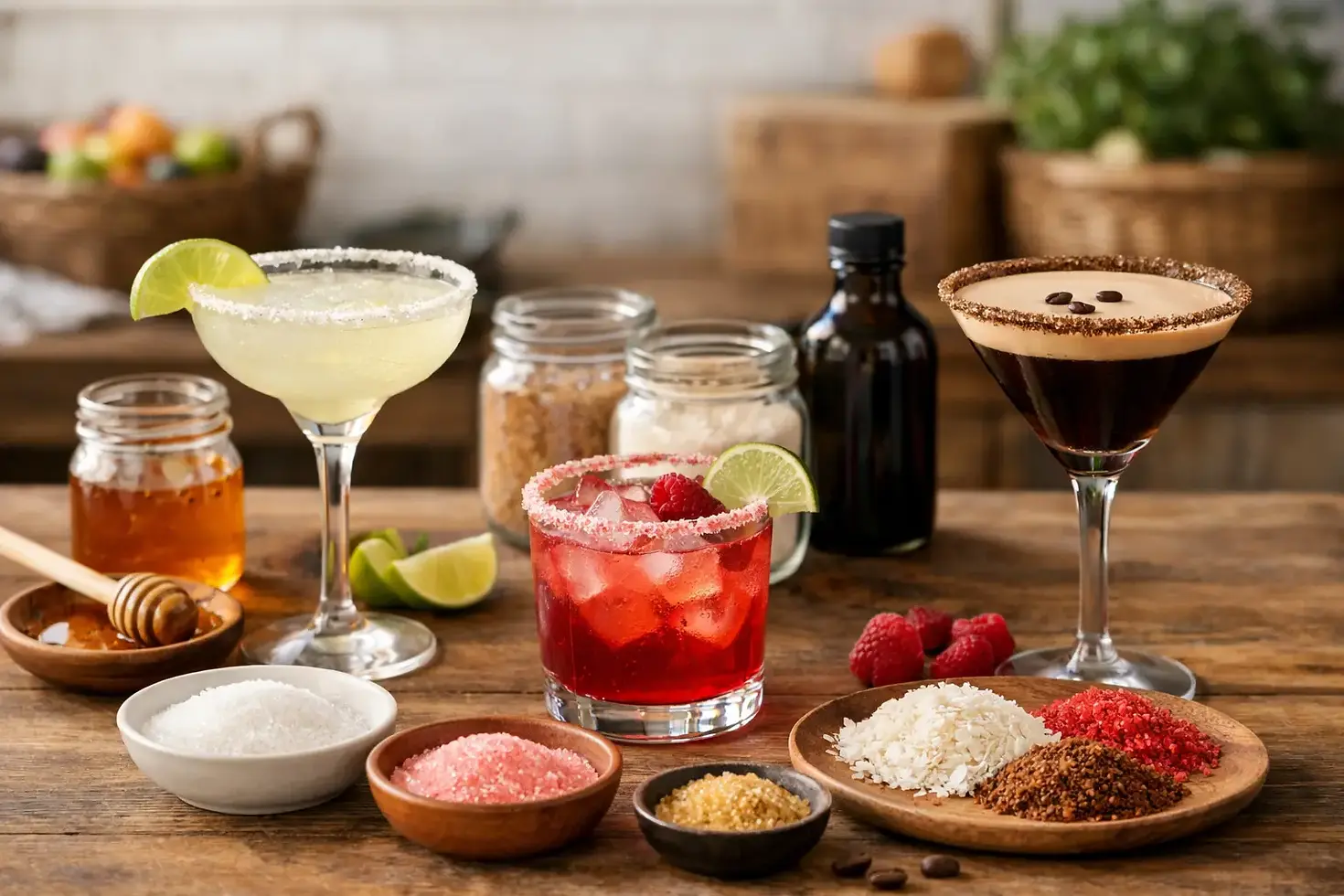
For a tart, ruby-red cranberry cocktail, a vanilla or orange-infused sugar adds softness and perfume. For a peach or mango drink, consider a cinnamon sugar when the weather turns cool, or a bright berry sugar for a summer gathering. A chocolate or espresso-style cocktail often welcomes vanilla, cinnamon, or a lightly salted sugar finish.
When using a spicy drink, such as one with ginger beer, jalapeño, or chili, think about balance. A citrus sugar can sharpen the flavors, while cinnamon can make the heat feel warmer and rounder. A very sweet fruit sugar may work, but it can mute the spice, so keep the rim narrow.
How to Rim a Glass Without the Mess
A clean rim begins with a clean, dry glass. Moisture on the outside can cause sugar to slide down the bowl, leaving a sticky trail instead of a crisp finish. Chill the glass first if the drink calls for it, then wipe away any condensation before you start.
Use a citrus wedge when the drink has lemon, lime, orange, or grapefruit flavors. Run the cut side around the outer edge of the glass, rather than coating both the inside and outside. Keeping the inside clear prevents loose sugar from dropping into the cocktail too quickly. For drinks where citrus would not fit, a small amount of honey, simple syrup, or a matching fruit juice can help the sugar adhere.
Pour the sugar onto a small plate that is wider than the rim. Hold the glass at a slight angle and gently roll only the moistened outer edge through the sugar. Pressing the glass straight down can create a heavy, uneven band and may cover more of the rim than intended. A light roll produces a clean finish and leaves the drink easier to sip.
For a partial rim, coat just one half of the glass. This is especially helpful for cocktails with strong acidity, rich sweetness, or bold spices. It looks thoughtful, offers contrast, and lets guests control how much sugar they pick up with each sip.
Timing makes a difference
Rim glasses shortly before serving. Given too much time, citrus juice can dissolve the sugar crystals and reduce their sparkle. If you are preparing for a group, set out the glasses, sugars, citrus, and garnishes ahead of time, then finish each drink as it is poured.
A rimmed glass also deserves a gentle garnish. A thin citrus wheel, a few berries, a sprig of rosemary, or an apple slice can echo the sugar flavor without overcrowding the glass. If the sugar is already vibrant and aromatic, a simple garnish is often all that is needed.
Matching the Rim to the Occasion
For brunch, lean toward cheerful, approachable flavors. Berry sugar on a sparkling drink, cinnamon sugar with a coffee cocktail, or citrus sugar on a light vodka spritz feels festive without being fussy. A partial rim works well when serving a mix of sweet and savory brunch dishes.
For a fall gathering, warm flavors create an inviting table. Cinnamon sugar on apple cider cocktails, vanilla sugar on a creamy after-dinner drink, or a citrus-spice finish beside bourbon can make familiar ingredients feel seasonal. Use clear glassware when possible, since the color and texture of the rim become part of the presentation.
For celebrations, a sparkling sugar rim has its place, particularly with champagne cocktails and fruity punches. Still, consider the drink's sweetness before reaching for the fullest coating. A crisp dry sparkling wine may welcome a more generous rim, while a sweet prosecco cocktail often needs only a delicate edge.
A thoughtfully chosen rim can also make a nonalcoholic drink feel just as considered as a cocktail. Fresh lemonade, fruit spritzers, iced tea, sparkling cider, and zero-proof botanical drinks all benefit from the same attention to flavor and presentation. This matters when entertaining because everyone deserves a glass that feels made for them.
Common Rim Mistakes to Skip
The most common mistake is using too much moisture. A dripping citrus wedge creates clumps, while a dry rim will not hold enough sugar. The goal is a thin, even layer of liquid, applied only where the sugar should sit.
Another is pairing a strongly flavored sugar with a drink that is already busy. If the cocktail has several juices, herbs, bitters, and syrups, a plain cane sugar may be the better choice. Let one or two flavors lead. A rim is a finishing note, not another full ingredient list.
Finally, do not forget the practical side of the glass. An overly thick rim can fall onto clothing, tabletops, and serving trays. It can also make a refined drink awkward to enjoy. A lighter coat usually looks more artisan made and tastes more balanced.
Set out two or three sugar choices at your next gathering and let the flavors guide the mood. Whether the glass gets a bright citrus edge, a warm cinnamon finish, or a hint of berry, that first sparkling sip gives people a reason to pause, smile, and enjoy what has been made with care.