Vanilla Sugar for Baking Cookies That Stand Out
A cookie can be perfectly baked and still feel like it is missing something. The edges are golden, the center is tender, and the texture is right - but the flavor lands a little flat. Vanilla sugar for baking cookies is a simple pantry upgrade that brings a fuller, warmer aroma to familiar doughs without changing the kind of cookie you set out to make.
Unlike plain granulated sugar, vanilla sugar carries fragrant vanilla throughout every spoonful. It gives cookies a soft, bakery-style perfume that rises as the dough bakes, making classic recipes taste more intentional. For home bakers who care about recognizable ingredients, small-batch flavor, and the details guests remember, it is a lovely ingredient to keep within reach.
What Vanilla Sugar Brings to Cookie Dough
Vanilla is often thought of as a background flavor, but it does more than sit quietly behind chocolate, butter, or spice. It rounds sharp notes, softens the sweetness of sugar, and gives baked goods a comforting aroma that feels familiar from the first bite. When vanilla is infused into cane sugar, that flavor is distributed evenly through the dry ingredients instead of relying on a splash of extract alone.
The difference is especially noticeable in cookies with a short ingredient list. Sugar cookies, butter cookies, shortbread, and snickerdoodles have nowhere for flavor to hide. A fragrant vanilla sugar gives these simple bakes a more finished character while preserving their classic appeal.
It also has a practical advantage: vanilla sugar sweetens and flavors at the same time. If a recipe already calls for granulated sugar, you can use vanilla sugar for part or all of that amount without reworking the dough's balance. The texture, spread, and structure remain close to the original recipe because the sugar is still doing the job sugar is meant to do.
How to Use Vanilla Sugar for Baking Cookies
The easiest approach is substitution. Replace an equal amount of the recipe's granulated sugar with vanilla sugar. For a first batch, using it for half of the white sugar is a good way to notice its flavor while keeping the recipe comfortably familiar. In delicate cookies, such as shortbread or cut-out sugar cookies, using vanilla sugar for all of the granulated sugar can create a beautifully fragrant result.
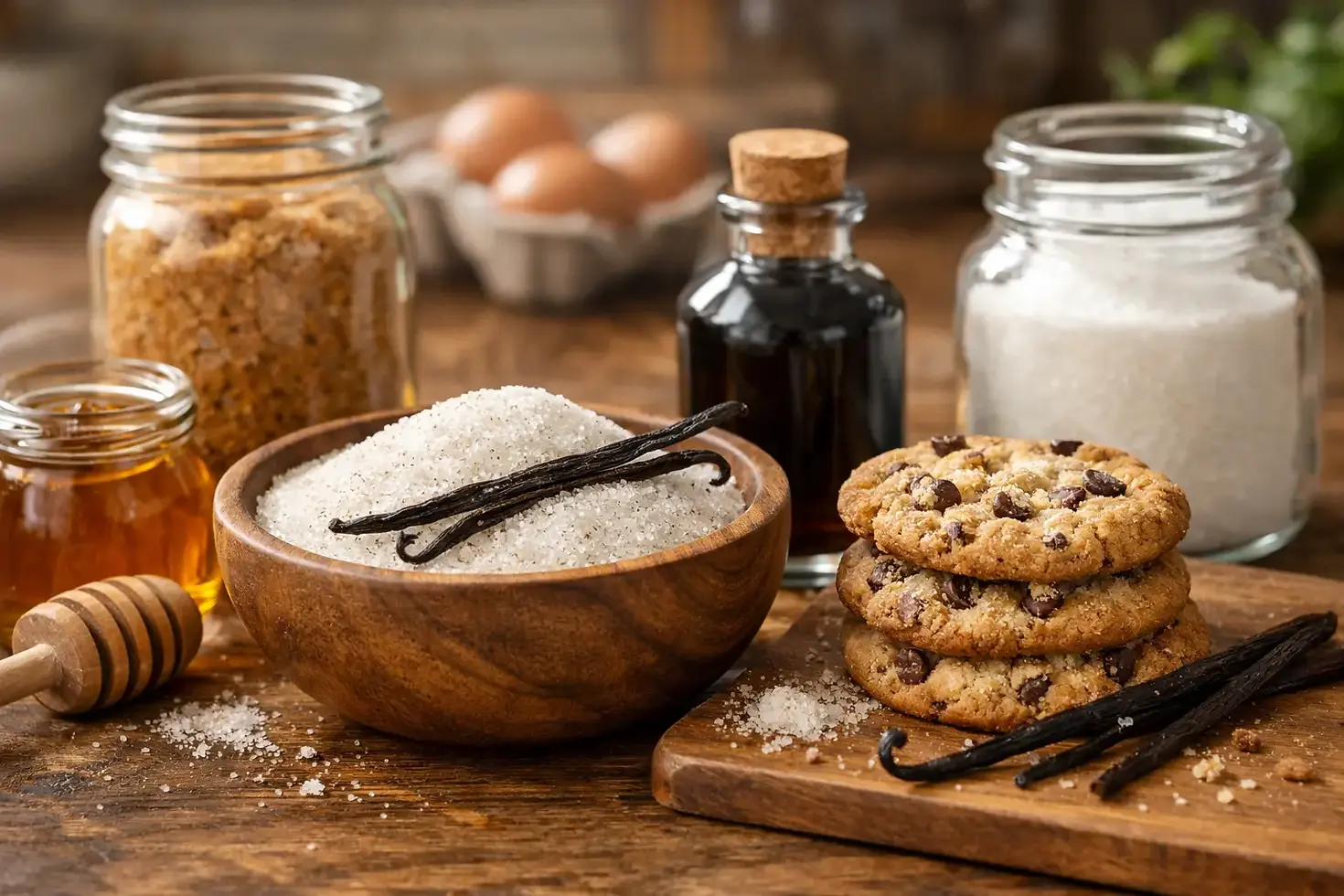
Brown sugar changes the equation slightly. Its molasses note is bold and brings moisture to dough, so it is usually best to leave brown sugar in place and swap only the white sugar. In a chocolate chip cookie recipe, for example, vanilla sugar can replace the granulated sugar while the brown sugar continues to provide chew and caramel-like depth.
If your recipe calls for vanilla extract, you do not necessarily need to remove it. Vanilla sugar and pure vanilla extract can work together, particularly in cookies meant to feel rich and aromatic. The sugar creates a gentle, even vanilla presence, while extract adds another layer of depth. For a lighter flavor, keep the extract as written and replace only part of the sugar. For a more pronounced vanilla cookie, use vanilla sugar for the full white-sugar portion and retain the extract.
A few thoughtful adjustments help it shine:
In recipes with citrus zest, vanilla sugar adds warmth without competing with the bright oils of lemon or orange.
In spice cookies, it smooths the edges of cinnamon, ginger, cardamom, and nutmeg.
In cocoa-based cookies, it makes the chocolate taste rounder and less one-dimensional.
In butter-forward cookies, it becomes a main flavor rather than a supporting note.
Because every recipe has its own personality, bake a small test batch when you are trying a new proportion. That is particularly helpful with heirloom recipes, where the balance of sweetness and aroma may be part of the tradition.
The Best Cookies for Vanilla Sugar
Sugar Cookies and Cut-Out Cookies
Vanilla sugar is at home in sugar cookies because its flavor is clear and uncomplicated. It gives the dough a warm scent before it reaches the oven and supports the buttery flavor after it cools. For decorated cookies, this extra vanilla note is especially welcome because royal icing or a simple glaze can add sweetness without adding much depth to the cookie itself.
In cut-out dough, use the vanilla sugar in place of the white sugar called for in the recipe. Chill the dough as usual, roll it to the stated thickness, and avoid overbaking. The vanilla fragrance is most appealing when the cookies remain pale and tender rather than deeply browned.
Shortbread and Butter Cookies
Shortbread is a lesson in restraint. Flour, butter, sugar, and salt are often all that stand between a forgettable cookie and an exceptional one. This is where a handcrafted vanilla sugar earns its place in the pantry. It brings a polished, aromatic note without adding another wet ingredient or distracting from good butter.
Use it as the recipe's primary sugar, then finish the cookies with a light sprinkle before baking only if the recipe can handle a delicate crisp top. The trade-off is texture: a heavy coating of sugar can make a tender shortbread surface crunchier. A light hand keeps the focus on that clean, buttery crumb.
Chocolate Chip Cookies
Chocolate chip cookies are generous enough to welcome vanilla sugar without losing their cozy, familiar identity. Replace the white sugar, not the brown sugar, and the dough will keep the chewy texture many bakers love. The vanilla lifts the chocolate and makes toasted butter, if your recipe uses it, smell even more inviting.
This is a good choice when you are baking for a crowd. People may not immediately identify what is different, but they will notice that the cookies taste unusually complete. It is the kind of small change that makes a well-loved family recipe feel special on a cookie tray or at a neighborhood gathering.
Snickerdoodles and Spice Cookies
Cinnamon and vanilla are natural companions. In snickerdoodles, vanilla sugar adds softness behind the cinnamon-sugar coating, helping the cookie taste more rounded from center to edge. In ginger molasses cookies, it can bring a mellow contrast to peppery ginger and dark molasses.
For spice cookies, consider where you want the vanilla to appear. Used in the dough, it creates a quiet warmth throughout. Used in a light finishing sprinkle, it becomes more aromatic at the surface. Both approaches are appealing, but the first is usually better for cookies that need to travel or be stored for a few days.
Choosing the Right Moment for a Vanilla Finish
Vanilla sugar is not limited to the mixing bowl. A small sprinkle before baking can add sparkle and aroma to cookie tops, though it works best on doughs that do not spread excessively. Pressed shortbread, thumbprints, and butter cookies are particularly good candidates.
For soft cookies, a finishing sprinkle immediately after baking can be more effective. The residual heat helps the crystals cling without creating a hard top. Use just enough to catch the light and deliver a little fragrant sweetness with the first bite.
Be mindful of recipes that already include a sugary coating, such as crinkle cookies or heavily frosted holiday cut-outs. Adding vanilla sugar everywhere can make the final cookie sweeter than intended. In those cases, choose one place for it to do its work: the dough, the topping, or the garnish.
Flavor Pairings Worth Keeping in Your Baking Notes
Vanilla sugar is wonderfully adaptable, but it is not meant to overpower every cookie. It is most successful when it supports the recipe's main flavor. Pair it with lemon for a bright, creamy contrast; with raspberry or strawberry for a dessert-like berry note; or with toasted pecans for a warm, nutty finish. It also complements espresso, maple, coconut, and dark chocolate with ease.
For holiday baking, vanilla sugar offers a gentler alternative to piling on more spice. A vanilla-scented butter cookie alongside gingerbread, peppermint bark, and cranberry treats gives a cookie platter a calm, classic anchor. For spring and summer gatherings, it brings a soft, floral warmth to citrus, berry, and almond cookies.
At Bee-utiful Infusions, small-batch pantry flavors are made for these kinds of everyday details: the extra fragrance in a butter cookie, the more memorable batch brought to a school event, or the familiar recipe that becomes a new family favorite. Thoughtful ingredients do not need to make baking complicated. They simply give a good recipe more to say.
The next time a cookie recipe calls for ordinary white sugar, consider what a gentle layer of vanilla could add. One measured swap can turn a simple batch into something guests linger over, asking for just one more.