Which Honey Suits Charcuterie? A Flavor Guide
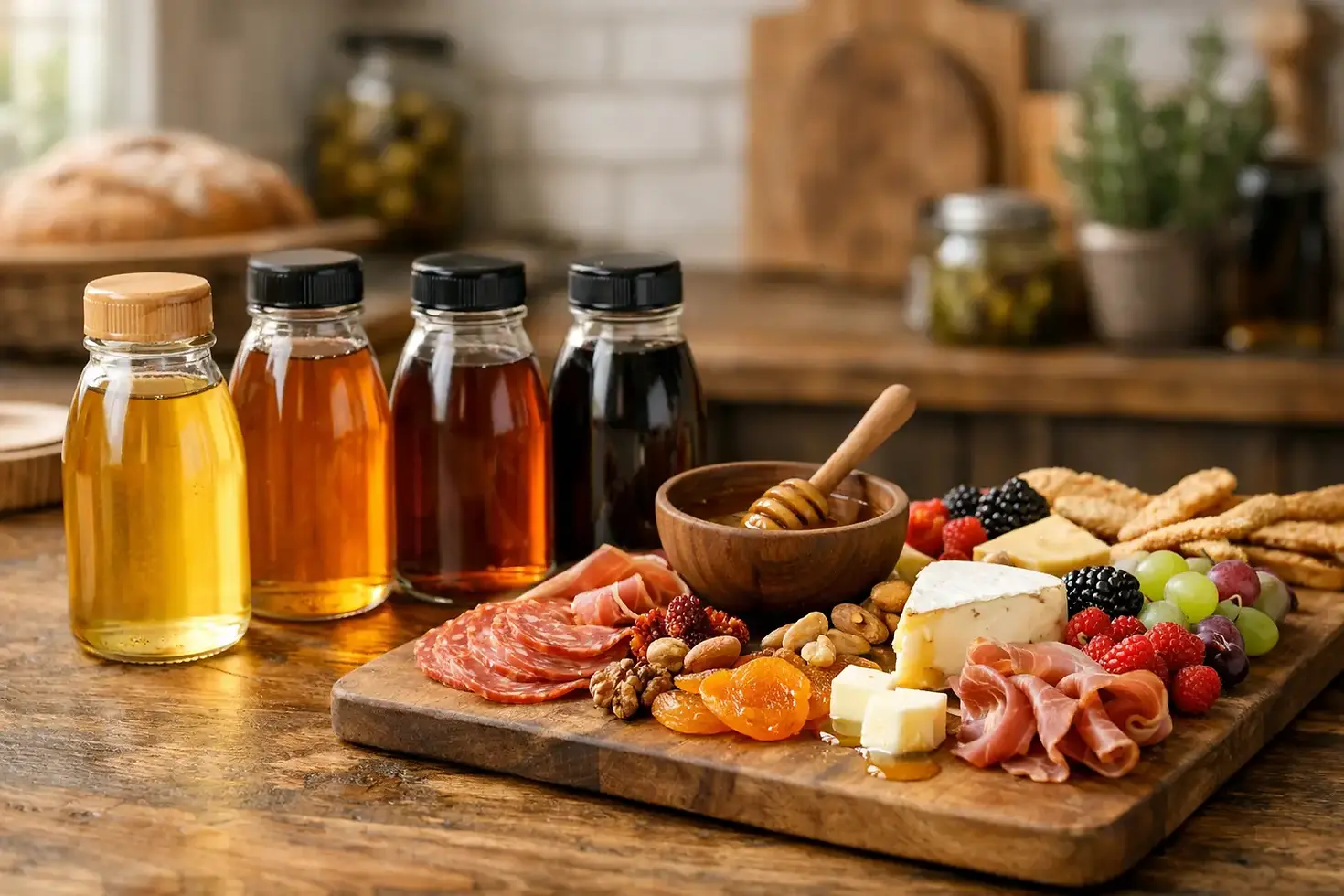
A charcuterie board can have beautiful cheeses, ribbons of prosciutto, ripe fruit, and a bowl of salty nuts, yet still feel like it is missing one small spark. Honey often provides it. A thoughtful drizzle brings sweetness, shine, and contrast to rich ingredients. If you are wondering which honey suits charcuterie, start by matching its flavor intensity to the cheese and meat on the board.
Honey is not simply a sweet finishing touch. Its floral, fruity, spicy, or caramel-like notes can pull separate bites together. The best choice depends on what you are serving, how bold those ingredients are, and whether the honey will be drizzled, spooned into a small bowl, or served with a cheese knife for guests to add themselves.
Which Honey Suits Charcuterie? Start With the Board
A mild, balanced board calls for a mild or bright honey. Think fresh goat cheese, buttery brie, young cheddar, thinly sliced turkey, apples, grapes, and plain crackers. A gentle wildflower-style honey or a light berry infusion adds sweetness without covering the delicate flavors already on the plate.
A richer board needs more character. Aged cheddar, blue cheese, smoked meats, peppery salami, roasted nuts, and dark rye crackers have enough depth to welcome a bolder honey. Warm cinnamon, vanilla, or a deeper, more full-bodied honey can soften salt and smoke while adding a memorable finish.
The useful rule is simple: choose a honey that is at least as flavorful as the cheese, but not so strong that every bite tastes the same. When the board includes both gentle and bold options, offer two honeys. Guests enjoy making their own pairings, and the board feels generous without becoming complicated.
Pair Honey With Cheese First
Cheese is usually the best starting point because its texture and tang tell you what kind of sweetness it wants. Creamy cheeses tend to welcome bright, fruit-forward honey. Firmer, nuttier cheeses can handle warm spice and deeper floral notes. Blue cheese almost always benefits from a honey that provides a clear, clean counterpoint to its savory bite.
Soft, Creamy Cheeses
Brie, camembert, triple cream cheese, and fresh goat cheese are lovely with light floral honey, berry-infused honey, or honey with a gentle citrus-like brightness. The goal is lift. These cheeses are rich, so a fresh fruit note keeps the bite from feeling heavy.
Try brie with a berry-infused honey and sliced pears. For goat cheese, pair a bright honey with strawberries or apricots and toasted almonds. A small drizzle is enough. Too much honey can make soft cheese slide around on a cracker and hide its milky flavor.
Aged and Nutty Cheeses
Aged cheddar, gouda, Gruyere, manchego, and Parmesan-style cheeses invite honey with more warmth. Vanilla-infused honey can bring out caramel notes in gouda and cheddar. Cinnamon honey is especially good with nutty cheeses, apple slices, and pecans, creating a cozy balance that works beautifully from fall gatherings through casual winter nights.
These pairings do well with hearty crackers or sliced baguette. Their sturdy texture gives the honey somewhere to settle, so guests can enjoy the cheese rather than chasing a sticky drizzle across the board.
Blue Cheese and Washed-Rind Cheese
Blue cheese is salty, creamy, and sharp. It needs contrast, not competition. A smooth floral honey, a berry-forward honey, or a classic honey with a clear natural sweetness can make blue cheese taste rounder and less aggressive. Add walnuts, figs, or pear slices, and the pairing becomes rich without feeling overly sweet.
Washed-rind cheeses can be earthy and aromatic. Here, a restrained honey is often better than a heavily spiced one. Let the cheese remain the conversation starter, with honey acting as its welcoming companion.
Match the Honey to Cured Meat
Cured meat brings salt, fat, and sometimes pepper, smoke, garlic, or heat. Honey balances those bold savory notes, but the best pairing changes from one meat to another.
Prosciutto is delicate, silky, and lightly salty. A soft floral or fruit-infused honey works well, particularly when paired with melon, peaches, or fresh mozzarella. Soppressata and salami have more spice, so cinnamon honey or a fuller flavored honey can stand up to their paprika and pepper notes. Smoked sausage and smoky ham are especially inviting with vanilla or warm-spiced honey, which highlights their savory richness rather than fighting it.
If your board includes hot coppa, peppered salami, or another spicy selection, keep the honey sweeter and simpler. Spice against spice can become tiring. A clean spoonful of honey gives the palate a pleasant pause between bites.
Build Each Bite Around Contrast
The most satisfying charcuterie bites usually include a few elements at once: something creamy, something salty, something crisp, and something sweet. Honey makes that balance easy, but it is not meant to coat everything.
For a reliable combination, layer a cracker with aged cheddar, a thin apple slice, and a touch of cinnamon honey. Or spread goat cheese on a crostini, add a strawberry, then finish with berry-infused honey. Blue cheese, fig, walnut, and a floral honey create another classic bite with enough texture and flavor to feel special.
Acid is valuable when a board is especially rich. Pickles, cornichons, pickled cherries, or a few tart grapes can keep honey from making the overall spread feel too sweet. Likewise, crunchy walnuts, pistachios, and almonds add welcome texture against creamy cheese and silky meat.
Consider the Season and Occasion
A spring or summer board often feels best with fresh fruit, soft cheese, and brighter honeys. Berry notes are natural alongside strawberries, raspberries, peaches, and fresh herbs. These combinations are easygoing enough for a patio lunch yet polished enough for a bridal shower or brunch.
For autumn, bring in apples, pears, roasted nuts, aged cheese, and warm flavors. Cinnamon honey belongs here. It adds familiar comfort without requiring the entire board to become dessert-like. In winter, pair vanilla or warm spiced honey with smoked meats, dark crackers, dried figs, and rich cheeses for a board that feels gathered and generous.
For a celebration, consider serving honey in a small, labeled dish beside a cheese it was chosen to complement. This tiny detail encourages guests to taste with intention. It also makes a handcrafted board feel personal rather than assembled from a checklist.
How Much Honey Should You Serve?
Less than you think. Start with one small dish for every two to three cheeses, or offer two varieties on a larger board. A few tablespoons of each is usually plenty for a small gathering because honey is concentrated and guests use it in small drizzles.
Place the honey near the cheese it suits best, with its own spoon or honey dipper. Avoid pouring it directly over an entire wedge unless you are serving that cheese immediately. A pool of honey can make a board messy, soften crackers, and prevent guests from trying their own combinations.
Temperature matters, too. Honey pours more easily at room temperature. If it has crystallized, that is a natural change in texture, not a sign that it has gone bad. It can still be delicious on a board, especially alongside soft cheese, though a gently pourable consistency is often easiest for entertaining.
A Small-Batch Touch for a Memorable Board
An artisan honey gives even a simple board a point of view. At Bee-utiful Infusions, small-batch infused honey brings recognizable ingredients and inviting flavor to the table, whether you are setting out a quick Friday-night snack or welcoming a full house. Choose one flavor that echoes the season, then let a few excellent cheeses and thoughtfully selected accompaniments do the rest.
The next time you build a board, do not treat honey as an afterthought. Taste a little with each cheese before guests arrive, trust the pairing that makes you reach for one more bite, and serve that with confidence.