Vanilla Extract Grades Guide for Better Baking
A beautiful bottle of vanilla can make a pantry feel ready for anything - Sunday pancakes, birthday cake, a creamy custard, or a warm mug of coffee. But labels can be surprisingly confusing. This vanilla extract grades guide clears up what terms like Grade A, Grade B, pure extract, and double-fold really mean, so you can choose vanilla for the flavor experience you want.
The most useful place to start is this: vanilla bean grades and vanilla extract standards are not the same thing. A bean’s grade describes its appearance and moisture. An extract’s quality depends on the vanilla used, the concentration, the ingredients, and the care behind the finished bottle.
Vanilla Extract Grades Guide: Bean Grades vs. Extract Quality
When shoppers see Grade A or Grade B on a vanilla label, those terms usually refer to the vanilla beans, not an official A-to-B scale for the extract itself. That distinction matters because a Grade B bean is not automatically a lesser choice for baking.
Grade A vanilla beans
Grade A beans are often called gourmet or premium beans. They tend to be plump, soft, glossy, and higher in moisture. Their appearance makes them especially lovely for recipes where the bean itself will be seen or scraped into a dish, such as vanilla bean ice cream, pastry cream, or a special batch of frosting.
These beans are prized for their visual beauty and supple texture. That does not mean every extract made with Grade A beans will taste stronger or more complex than every other extract. Once vanilla is in extract form, the full character of the finished bottle matters more than the bean grade alone.
Grade B vanilla beans
Grade B beans are often called extract-grade beans. They are usually drier, slimmer, and less visually uniform than Grade A beans. Those traits can make them less suited to a recipe that showcases whole bean pods, but they can still carry deep, appealing vanilla flavor.
For extracts, Grade B is often a practical and flavorful choice. The beans may not look as polished, yet appearance is not the same as aromatic potential. A carefully selected extract-grade bean can bring warm, familiar vanilla notes to cookies, cakes, sauces, and beverages.
What the grade does not tell you
Bean grade cannot tell you everything about an extract. It does not reveal the bean’s origin, the variety, the age of the extract, its concentration, or whether the finished flavor will lean creamy, floral, woody, fruity, or dark and caramel-like.
If a label calls an extract “Grade A,” treat that as an invitation to read further rather than a guarantee of superiority. Look for clear, recognizable ingredients and a maker who describes the product plainly. Artisan food is at its best when the label gives you confidence, not a puzzle to solve.
What “Pure Vanilla Extract” Means
In the United States, pure vanilla extract has a recognized standard of identity. It must contain vanilla-derived flavor and at least 35% alcohol by volume. Traditional single-fold pure extract is also tied to a defined amount of vanilla beans per gallon of finished extract.
For the home baker, “pure” is a meaningful word. It signals that the vanilla flavor comes from real vanilla beans rather than only from added flavor compounds. Pure extract brings more than sweetness to a recipe. It can add roundness, warmth, gentle floral notes, and the lingering aroma that makes a simple butter cake or shortbread taste complete.
That said, pure does not mean every bottle tastes identical. Vanilla varies naturally by growing region, bean type, and the balance a maker seeks in the finished extract. One bottle may feel bold and deeply caramelized; another may be lighter, fruitier, or more delicate. Neither is automatically better. The right choice depends on what you are baking and the flavor profile you enjoy.
Single-Fold and Double-Fold Vanilla Explained
If bean grade describes the raw ingredient, fold describes concentration. This is one of the most helpful details to understand when choosing vanilla extract.
A standard single-fold extract offers the classic vanilla strength most recipes are written for. It is a dependable everyday choice for chocolate chip cookies, banana bread, waffles, whipped cream, and coffee drinks. In recipes with modest baking times and familiar proportions, it delivers the warm vanilla presence people expect.
Double-fold extract is more concentrated, with roughly twice the vanilla bean content of a standard single-fold extract. It can be especially rewarding in recipes where vanilla needs to be the star rather than a quiet background note. Think vanilla-forward buttercream, no-bake cheesecake, rice pudding, custard, panna cotta, or a carefully stirred old-fashioned cocktail.
More concentrated does not always mean you should use more. In a delicate recipe, too much of any strong extract can overwhelm other ingredients. Start with the recipe’s stated amount unless the bottle offers a clear usage suggestion. When you want a bolder vanilla character, double-fold can give you greater depth without adding unnecessary liquid.
How to Read a Vanilla Extract Label
A good label should make your choice easier. Begin with the ingredient list. For a straightforward pure vanilla extract, you will generally see vanilla bean extractives, alcohol, and water. Some vanilla products may include sugar or other ingredients, particularly when they are designed for a specific use, so it is worth checking if you prefer a traditional extract.
Next, notice whether the product says pure vanilla extract, vanilla flavor, or imitation vanilla. These are different categories, and they serve different purposes.
Pure vanilla extract is the choice for cooks and bakers who want the layered character of real vanilla. Vanilla flavor may combine vanilla with other natural flavoring ingredients. Imitation vanilla is typically built around vanillin, the compound most people recognize as vanilla aroma. It can be useful when a recipe needs a straightforward vanilla note, but it usually does not offer the same depth as a well-crafted pure extract.
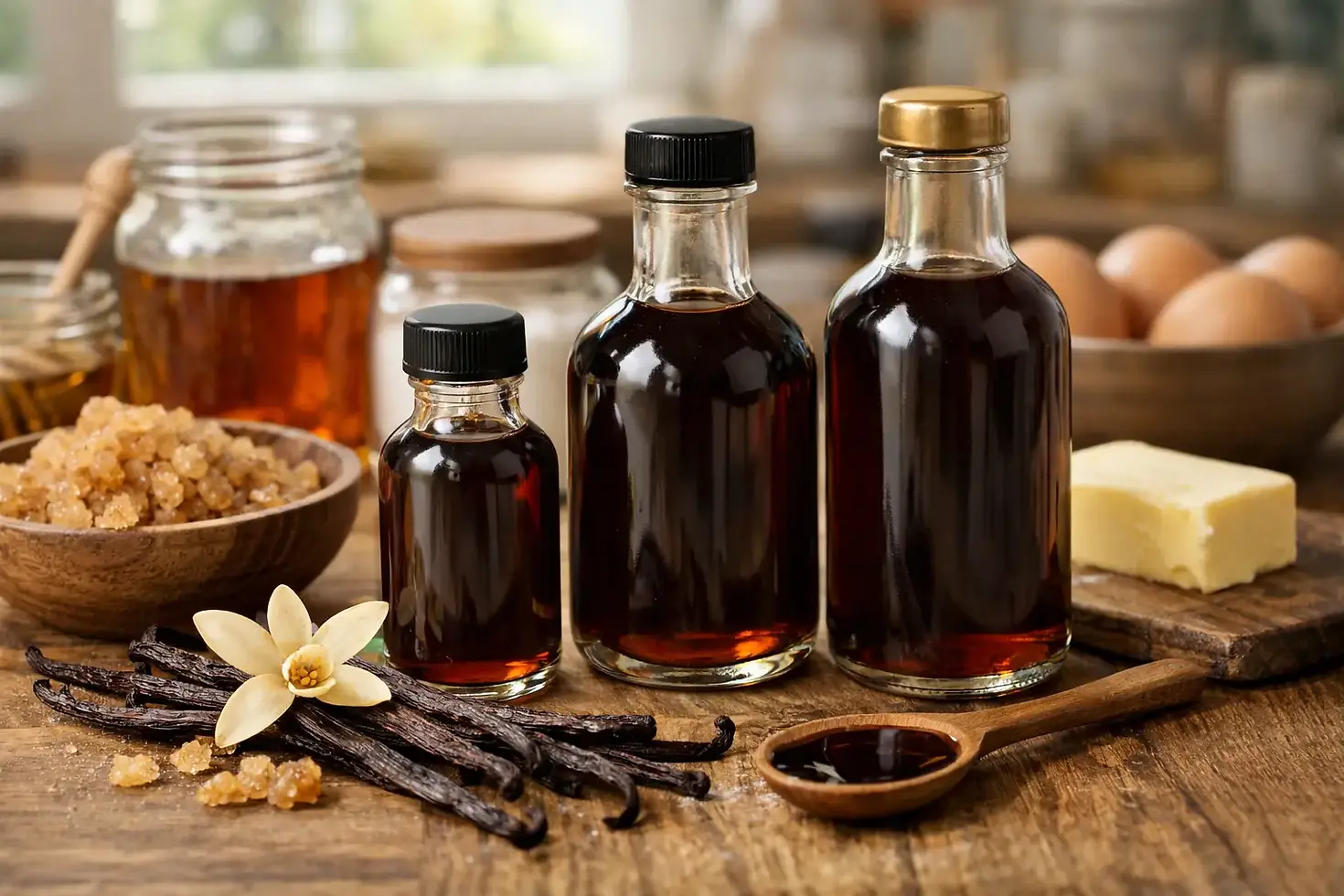
Also resist judging by color alone. A darker extract may look dramatic in the bottle, but color does not independently prove concentration or flavor quality. Vanilla bean specks are equally appealing but are not a universal measure of excellence. In some recipes, specks are a charming visual cue. In others, such as a pale glaze or smooth beverage, you may prefer a clear-looking extract with the same inviting aroma.
Choose the Right Vanilla for the Recipe
For everyday baking, a standard pure vanilla extract is usually the most versatile pantry choice. It works comfortably alongside brown sugar, butter, cinnamon, chocolate, fruit, and toasted nuts. Its familiar warmth supports a recipe without demanding attention.
For recipes with few ingredients, the vanilla becomes easier to notice. In vanilla sugar cookies, homemade marshmallows, buttercream, custard, and lightly sweetened cream, a more expressive extract can make a real difference. This is where a concentrated or especially aromatic vanilla earns its place.
Chocolate creates a useful trade-off. In deeply cocoa-forward brownies or a rich chocolate cake, vanilla often works behind the scenes, smoothing bitterness and making chocolate taste fuller. A standard extract is often enough. In a white chocolate dessert or a vanilla-chocolate swirl, however, the vanilla has more room to speak, and a bolder extract can be lovely.
Coffee and cocktails call for restraint. Begin with a few drops or a small measured amount, then taste. Vanilla should soften roasted coffee notes or round out a spirit, not turn the drink into a syrupy dessert unless that is your goal.
Freshness, Storage, and Flavor Confidence
Vanilla extract is shelf-stable, but it still deserves a thoughtful spot in the pantry. Keep the cap tightly closed and store the bottle in a cool, dark cabinet away from direct sun and heat. A shelf near the oven is convenient, but repeated warmth can dull delicate aromatics over time.
There is no need to refrigerate pure vanilla extract. Cold temperatures can mute the aroma temporarily, and a dark cupboard keeps the bottle easy to reach when inspiration strikes. If you use vanilla only for holiday baking, take a moment to open the bottle before starting a special recipe. The aroma should feel inviting, warm, and true to vanilla.
A handcrafted pantry is built one dependable ingredient at a time. Choose vanilla for its real-bean character, the recipe in front of you, and the moments you want to make more memorable - then let its quiet warmth do the rest.